





What We’re Working on: Responsive Design

by Robert Algeri on March 19, 2013

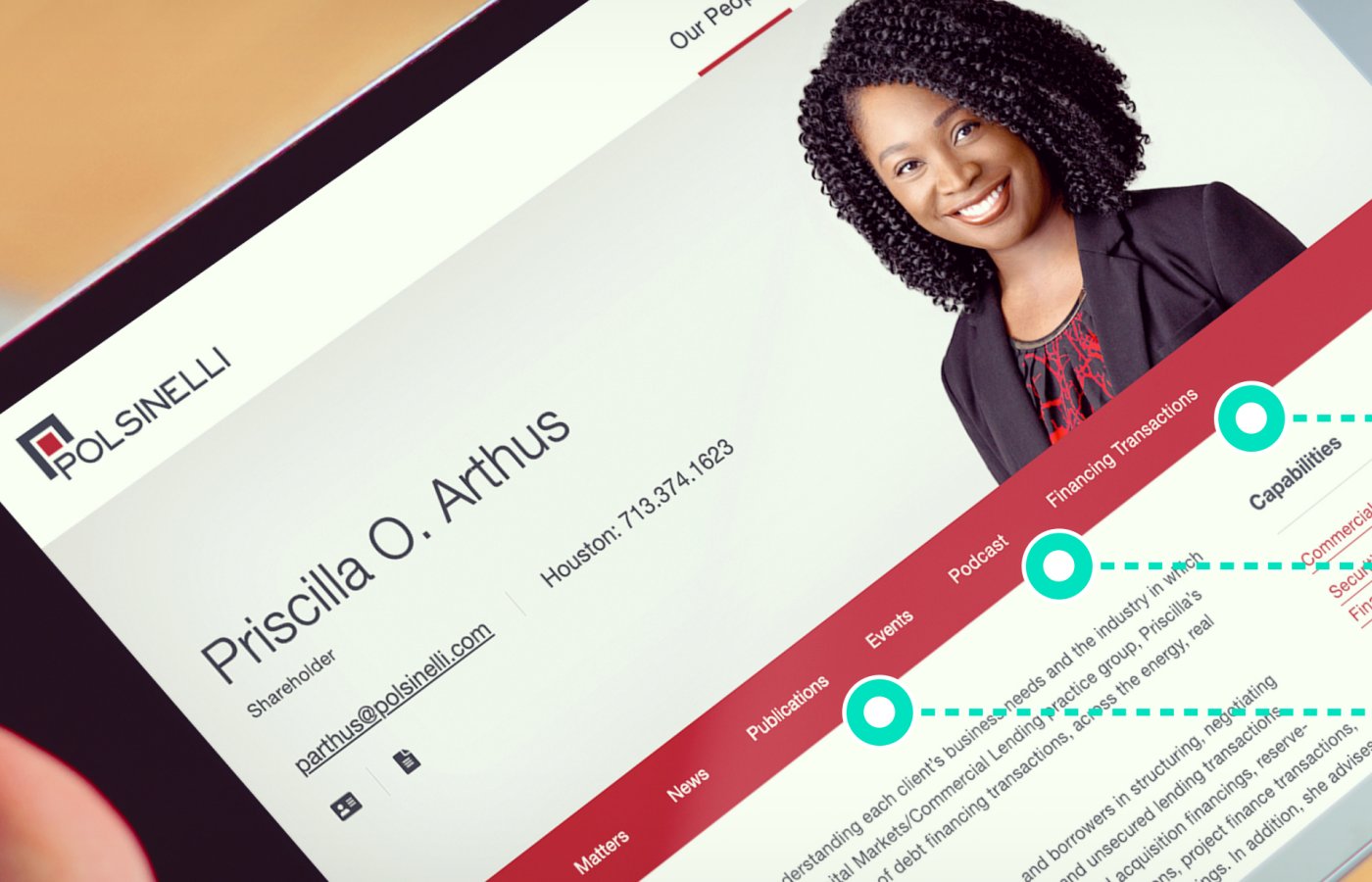
Have you heard about the great new mobile web marketing technology called “Responsive Design”? If you haven’t, you will. Responsive design makes websites more accessible to mobile users.

Here are some factors that explain why savvy legal marketers are eager to include this new technology in their firm’s next website:

  1. Increased mobile traffic. Great Jakes examined data from the law firm websites that we host and maintain. The data for the past year indicate that the number of visits coming from mobile devices has increased by 101% over that period. That translates to slightly more than one in ten visitors who use a smart phone or tablet device. As the graph below indicates, usage is projected to continue to increase.
  2. New screen-sizes require new technology. The size and shape of mobile devices keeps changing with each new tablet, smart phone or other whiz-bang device that gets dreamed up (like Apple’s rumored iWatch). Simultaneously, users find the experience not as good. Google reports that 48% of mobile visitors say that they feel “frustrated and annoyed” when on sites that are poorly optimized for mobile, and 36% say they feel like “they’ve wasted their time” when they visit those sites.

Responsive design was created to meet the unique needs of mobile users. It does this by repackaging each page of your firm’s website to fit on any screen size, automatically. Therefore, it doesn’t matter whether your website visitor is on an iPhone, iPad, laptop, desktop, Kindle or even a cinema display. Your website automatically expands and adjusts to fit the format.

More important, responsive design is ideally suited to support content marketing. It enables mobile users to see the firm’s actual website, not a slimmed-down “mobi” version. That means all the content that you post can be found, read and shared – primary things mobile users use their devices for.

The promise of responsive design technology is that it makes all the things law marketers are already doing with their websites, accessible to a demographic that is growing rapidly. If creating and sharing content is a priority for your firm, then having a website that is optimized for mobile can no longer be an afterthought. That’s why we’re encouraging all our clients to include responsive design when developing their websites.

I’ll be speaking about this at the LMA conference in Las Vegas on April 9th, but if you’re unable to make it, feel free to contact me. I’m happy to arrange a demo.

Bookmark and Share

{ 3 comments }

It’s a good idea to periodically tidy up your website and prune away pages of outdated info or old messaging. Likewise, it makes sense to periodically adjust the design of your site. As your firm’s business goals change, so should your website.

But at what point are message adjustments and cosmetic design fixes not enough? When do you know it’s time to consider a total rethink of your website?

Here are three points to consider:

  1. Are you marketing? Then you’re publishing.
    Marketers and lawyers alike know that unsupported statements amounting to, “Trust me, we’re great attorneys” offer little value and rarely move the needle. Claims of expertise need to be demonstrated, otherwise they are not credible. That’s why lawyers write and create content: articles, blog posts, etc.

    A key objective for every law firm website should be to make it as easy as possible for attorneys to share the reputation-enhancing content that they create, in order to demonstrate and support their expertise.

    Is the content that your attorneys create buried deep in the website? Could someone unfamiliar with your website find it in one or two clicks? Is it easy to share? Is the structure of your website designed to help your attorneys grow their business?

    If you answered “no” to any of these questions, then it’s probably time to rethink your website.

  2. Does posting a video (and other odd-ball content) require a team of tech pros?
    Traditional law firm websites were built to support “text” content, like articles. But in 2013, the content that attorneys produce is far beyond text. Video, podcasts, blog posts, tweets, presentations, photo-galleries – things that we playfully call “odd-ball content” – have become ubiquitous.

    Unfortunately, older websites were not constructed to accommodate “odd-ball” content. That’s too bad, because each bit of content helps support an attorney’s or practice area’s claim of expertise in their area of focus. Not supporting “odd-ball” content is no longer viable.

  3. Does navigating your website on an iPhone give you a migraine?
    Three mobile trends affecting law firms have emerged:

    1. The number of users visiting law firm websites from some type of mobile device (a smart phone or tablet) has increased 101% in the past year.
    2. Mobile no longer means just iPhones. More types of devices are being used (Kindles, smart phones, tablets, iPad minis, etc.).
    3. The experience that users have when viewing a website on a mobile device is not good: 48% say they feel “frustrated and annoyed” when on sites that are poorly optimized for mobile.

    To address these converging trends, a new standard for mobile accessibility has been introduced, called Responsive Design. This coding technique automatically resizes and adjusts the content on each page of your website to fit perfectly on the screen that’s viewing it. The result is a better user-experience, regardless of what device the visitor is using.

What does it all mean for law firms? For one, mobile can no longer be an after-thought. But more important, it means that legal marketing has changed and the Band-Aid fixes might no longer be enough. As the nature of law firm marketing changes, our websites need to change with it.

Bookmark and Share

{ 0 comments }

A Twitter feed in your bio?!

by Robert Algeri on February 12, 2013

“Have you seen any law firm websites that have a live Twitter feed?”

The question, posted by my friend Gail Lamarche, on the Legal Marketers Extraordinaire’s group on Facebook, sparked a great conversation about Twitter and how attorneys can make the most of it.

The quick answer to Gail’s question is, hardly any. Which is a shame. There’s tons of value from doing so.

I replied to Gail with examples from websites that we developed that include feeds from Twitter directly into the attorneys’ bios (see examples here and here). Then I followed up my response with the following explanation of the benefits of including a feed from Twitter directly into an attorney’s bio or practice area section.

  1. Twitter is like a speeding train. Post a tweet now and in moments it’s forgotten – lost in the stream of other tweets. It’s hard for attorneys to tweet often enough to remain high on people’s radar.But, by adding the Twitter feed to their bio or relevant practice area, you’ve created an easily accessible repository of all their tweets – and that repository doesn’t disappear.And as if that weren’t enough, that repository of past tweets is located exactly where potential clients are going to learn more about them – their bio or practice area. (A post we wrote with more info about this: Law Firm Websites and Beyond: How to Win and Retain Business.) Each link or information shared is another bit of reputation-enhancing content that helps potential clients understand the value that they’re able to offer.

  2. Marketing magic happens when attorneys feed their tweets into their bios or relevant practice areas. They give their clients and potential clients a reason to return!

  3. Chances are that the overwhelming majority of an attorney’s clients and potential clients either are not on Twitter, or if they are, they’re not following that attorney. But that’s OK because they can see what the attorney is sharing when they visit their bio – and now they have a compelling reason to do so, again and again.

    The best part of all this is that it requires very little time from the attorney to do.

Do you agree? I’d love to hear your thoughts on this.

Bookmark and Share

{ 1 comment }

What’s the goal of your website?

by Robert Algeri on January 21, 2013

I’d like to propose a starting point for every new law firm website initiative. Begin your next website project by asking one question:

“How can we craft our website so that it clearly demonstrates our keen understanding of our clients’ businesses and their challenges?”

Why begin with this question? Why not start the process by addressing design, or new tech functionality?

The recently released Altman Weil 2012 Chief Legal Office Survey offers an answer. In the section entitled “Law Firm Selection Influencers,” the survey reveals that the number-one thing that positively influences in-house counsels’ decision on which firms to hire was “demonstrated understanding of your business/industry.” It scored 9.6 out of a possible 10.

That is significant. It means that the old message of “trust me, we’re great attorneys that do great work” isn’t going to cut it anymore. In-house counsel want proof.

Providing the Proof
Imagine for a moment that you are an in-house counsel visiting your law firm’s website. What would you want the experience to be like?

Here’s a possible scenario: The firm, one of many that would like your business, has stayed on your radar because it has proven that it has unique experience and expertise in your area of business. You don’t have to take the firm’s word for it – you can tell from its abundance of case studies on matters that are directly related to your business. And its blog posts, videos of speaking engagements, and thought-leadership about things that you realize you will need to focus on, further demonstrate the firm’s deep understanding of your business.  The information shared is invaluable and keeps you coming back to the practice areas and related attorney bios. You know that given the opportunity, you’ll be working with this firm sooner or later.

Sound a bit too perfect? Perhaps, but shouldn’t creating an experience similar to this be the goal of your website? Specifically, shouldn’t your bio or practice area section compel in-house counsel to return there for ideas and insights that they can’t find elsewhere?

Doing this is not impossible. It requires three things:

  1. Focused marketing efforts on a niche area.
  2. Sharing your best ideas.
  3. Making it super easy to find those ideas on your website bio and practice areas.

We have some ideas on how to accomplish that last point.

Bookmark and Share

{ 1 comment }

Your resume bio is boring me

by Robert Algeri on December 7, 2012

What makes one attorney bio better than another?

One place to look for answers is the Marque firm, based in Sydney, Australia. After reading one, you want to read them all.

Legal marketing consultant Jordan Furlong’s recent article about the bios dissects what makes them so engaging. In addition to being “charming, insightful, engaging, funny and warm, not to mention extraordinarily well-written,” they do the following:

• “they make you want to meet the lawyer”
• “they casually intersperse…concise, illuminating and fun stories that tell you about the person”
• “they are perfectly integrated within the firm’s overall voice and brand”

But in my opinion, in addition to being all the above, the bios found on the Marque website include another special quality, one that is seldom seen. They’re not resumes!

The Marque bios wrap all the dull resume stuff up and place it into downloadable PDFs whose links are off to the side. What an interesting idea. It places the focus of the reader’s attention on other, presumably more important or memorable information about the attorney. If you really want to see a resume, it’s there, but I wonder how often anyone does.

Ready for a new type of bio?
The majority of attorney bios are essentially, structured resumes coupled with dense, fact-packed paragraphs. Unfortunately, this format does not make for the most memorable of reads.

But are law firms ready for bios that lead with something other than their resumes? What about a bio that conveys warmth or perhaps some humor?

I suspect that we’ll begin to see more law firms thinking about how their attorney bios can become more engaging. Hopefully, the Marque website bios will provide them with some inspiration. The Marque bios aren’t perfect, but they include elements that are worthy of borrowing.

Bookmark and Share

{ 1 comment }

Are law firm websites going to become extinct?

by Robert Algeri on October 23, 2012

Thought-leader and legal marketing expert Molly Porter recently wrote about the new curated blogging platform that LinkedIn is introducing to spotlight industry thought-leaders and how that may have a profound effect on law firm content marketing strategies.

One provocative idea that she shares is that LinkedIn’s changes may eventually make law firm websites superfluous.

It’s an interesting idea (one that has been debated since Facebook came on the scene, and probably before that). But in our opinion, there are two significant reasons why this is not likely any time soon.

  1. Marketing crossroad.
    In the fractured universe of the web, where information about an attorney is scattered on dozens of sites like LinkedIn, JDSupra, Facebook, YouTube, Twitter and Wikipedia, as well as throughout your firm’s website, there needs to be a “home-base.” The attorney bio is evolving to be that home-base – a repository of an attorney’s entire thought leadership, social media activity, and personal interests.

  2. Safeguarding your firm’s brand.
    Communicating the firm’s brand to outside constituencies, as well as internal audiences such as the firm’s attorneys and staff, is one of the greatest benefits of a firm’s website. Handing off control of your branding to another entity, such as LinkedIn, is a risky move that law firms (and other companies) will avoid.

Making it all work together.
The promise offered by LinkedIn’s new blogging platform that Molly’s piece discusses, and those of other social media sites, is tremendous. Attorneys should embrace all those venues. They’re perfect places to repurpose their best content and ideas.

But to help potential clients understand the value that a particular attorney can offer, the first step is to create worthwhile content.

Worthwhile content opens doors, builds reputations and removes doubt. But for it to further the attorney’s business goals, it needs to complement everything else that the attorney is doing and has done. One way to ensure that is by driving readers back to the attorney’s bio page, where they can see other reputation-enhancing information, such as success stories and past accomplishments. Here’s an example.

For many firms, turning the attorney’s bio into a “home-base” may mean re-conceiving the format of the firm’s bio pages. Here’s a recent blog post that we wrote that addresses this concept: Content Drives Everything.

The bottom-line: the challenge is not where to place great content on the web – but how to create something worthwhile that people want to share and induces the phone to ring.

Bookmark and Share

{ 2 comments }

I encourage you to read Kevin O’Keefe’s recent blog post relating the steep decline in newspaper revenue to the advent of blogging. He cites NYU professor and recognized media authority Jay Rosen, who believes that “newspaper advertising peaked the year blogging became an option.”

Why should legal marketers care about this? As Kevin shares, there are basically two reasons:

  1. Blogs are powerful. The combo of focused niche subject area content and its being authored by someone deeply interested in that area provides content-consumers with a quick deep-dive into detailed and authoritative information.

  2. Big opportunity for attorneys. Attorney-generated content drives new business. A recent study by Greentarget found, “Seventy-six percent of [outside counsel] say they attribute some level of importance to a lawyer’s blog when deciding which firms to retain.”

The big takeaway from Kevin’s piece is that lawyers, as subject matter experts, are perfectly situated to take advantage of the changing media landscape. But I think that blogs are just one of many tools that attorneys can use to share their ideas. Videos, whitepapers, podcasts and presentations are also effective.

Whatever the method, for attorney-generated content to yield results, it needs to be easily found, easily shared and easy to read. Some of our thoughts on how this can be accomplished can be found here.

As the value of attorney-generated content increases, firms that think like publishers will out-maneuver their competition in acquiring the attention of potential clients.

Bookmark and Share

{ 0 comments }

The digital breadcrumb dilemma.

by Robert Algeri on October 9, 2012

Our last blog post about the digital breadcrumb that gets left behind when people visit your website garnered quite of bit of buzz on the social networks. Our friend Sonny Cohen at Duo Design addressed it in a recent blog post. In his piece, he alludes to a point that warrants discussion:

Web analytic tools don’t offer much insight without coupling it with compelling content.

When we built our law firm website content management system, the Rainmaker CMS, we included a one-of-its-kind analytics dashboard that made it extremely easy for the marketing department to see, among other things, who is visiting and where the traffic goes to on their website.

But we didn’t stop there. The attorney-microsites solution (providing each attorney and practice area with their own small website within the firm’s website) allows marketing departments to see the same information for each and every attorney.

Seeing who is visiting a particular attorney’s bio is powerful stuff that offers concrete actionable data for attorneys, and the marketing department. And it’s not something that other programs like Google Analytics can provide.

But here’s the dilemma – if an attorney or practice area offers little worthwhile content, the data that these tools provide will not reveal much.

But one benefit of keeping tabs on your digital breadcrumbs is that it can help marketers determine what content should be created. Good content will result in more traffic, and thus more revealing data.

We’re big fans of employing enhanced analytics tools to boost your marketing efforts. But we’re even bigger fans of well-conceived content marketing strategies. Coupling the two is a winning approach.

Bookmark and Share

{ 0 comments }

What we’re reading: “Who is visiting your website?”

by Robert Algeri on October 1, 2012

In the September 2012 issue of the National Law Journal, legal marketing consultant Adrian Dayton wrote a very interesting piece about the “digital bread crumb” that gets left behind when someone visits a website.

Adrian describes reverse IP lookup tools that allow you to access that digital bread crumb to see which companies are visiting your website. Awesome.

A tool like reverse IP lookup should be part of every marketer’s arsenal. It offers two huge benefits:

  1. Actionable information. The value of knowing who’s visiting, and how often, is incalculable. As Adrian describes, it provides the firm/attorney a reason to reach out to a potential client. It also provides intelligence on things such as which of your competitors are stopping by.

  2. Elevation of Marketing’s status. Reverse IP lookup tools offer the hard data that C-level executives (Managing Partners) so desperately want. The information provides insight. It also reveals the value that the Marketing Department can bring, which ultimately allows Marketing to secure a seat at the table.

Reverse IP lookup is a standard feature in Great Jakes’ website content management system (CMS). Knowing which companies are visiting your website is crucial – and therefore needs to be easy to access. That’s why we provide this information on the first page that marketers see when they log into their website’s CMS.

But for mid-sized and large law firms, with dozens of practice areas and hundreds of attorneys, we felt that we had to sort this information in a way that would be more meaningful for the marketing department. That’s why we configured our system to delve deeper and provide this same information for each and every attorney and practice area.

Imagine what it could mean to an attorney or practice area leader to know exactly who’s visiting her bio or practice area. Now imagine how elevated the status of the Marketing Department becomes after you’ve shared this information…

Increasingly, enhanced analytics will help marketers drive successful initiatives. What new analytics tools are you employing to achieve your firm’s goals?

Bookmark and Share

{ 2 comments }

Content drives everything.

by Robert Algeri on September 24, 2012

“You have to be a publishing company, because content drives everything.”

Adam Stock, Director of Marketing at Allen Matkins, said this in a video about their firm’s use of JDSupra. (JDSupra is a content-sharing platform for attorneys that ties in with LinkedIn. We’re huge fans and active users of the platform. Here’s a link to the video.)

We couldn’t agree more with Adam. Worthwhile content open doors, builds reputations, removes doubt and a host of other things that you can read about here (The content marketing boom. 8 reasons why lawyers are creating all of this stuff.).

Adam’s point is that because content is so important, law firms need to start thinking more like a publishing company. But how do firms do that? I believe that it requires three things:

  1. A culture that encourages content creation.
  2. Distribution tools (e.g., JDSupra, YouTube, Twitter, LinkedIn).
  3. A “home-base” for everything. Specifically, a website that is designed to showcase the firm’s content in a way that maximizes its ability to help generate business.

Regarding the last point, there’s a hurdle to overcome: traffic being drawn to most law firms’ websites (a) isn’t finding the content the user came for, or (b) is finding content that the user doesn’t find relevant.

Oddly, even though the majority of website traffic happens on the attorney bio pages, most law firm websites have been crafted to push visitors away from the bio, to other sections of the website to find relevant information. We call this the “Ping-Pong Effect” (Click here to see a visualization of this.).

The law firm website should help attorneys more.
In today’s business environment, creating and sharing content is essential to driving new business. But turning your website into a content “home-base” works only if the content is placed where the traffic is going – and that’s the attorney bio.

Thinking of your website as a publishing platform goes hand-in-hand with creating robust attorney bios that encourage people to not click away to some other section of the website.

Bookmark and Share

{ 1 comment }