When law firms consider improving their logo and visual identity, the conversation is normally framed as a binary choice: a) keep it, or b) throw it away and start from scratch.
As discussed in our previous piece, there’s another option that’s preferred by the world’s most successful brands, including Apple, Shell, Starbucks, BMW, and Coca-Cola. These big brands evolve their logos. They seldom, if ever, fully redesign their logos.
An evolutionary approach is smart because it allows an organization to retain hard-earned brand equity (and encourage brand loyalty) while modernizing and improving its look.
Catalysts for a Logo Evolution
In our experience, logo tweaks seldom happen on a whim. Rather, they are prompted by a need to address a specific shortcoming of the firm’s visual identity. Below we’ve detailed four common issues that prompt organizations to tweak their logos and graphic identities.
1. Digital Scalability
Logos that were designed for print often fall flat when viewed on a screen. Typical monitors are low resolution when compared with a printed page. As a result, logos that feature thin lines, gradient effects, and small text tend to break down when they appear small on a screen.
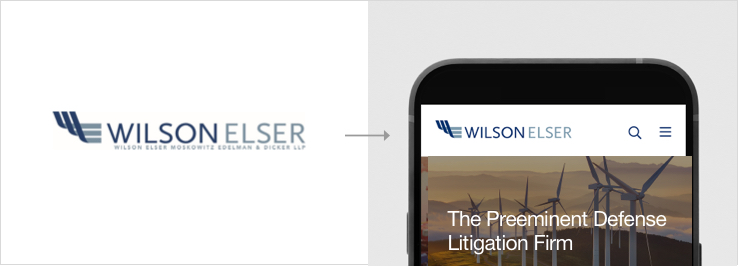
For example, the Wilson Elser logo formerly included small text that became illegible as the logo size scaled down. This issue prompted a logo tweak to remove the text, vastly improving the impact of the logo on digital properties.
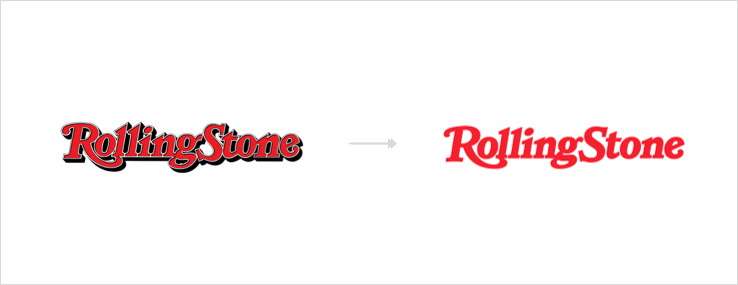
The Rolling Stone (magazine) logo was recently adjusted for a similar reason. The original logo was designed with lots of hairlines and drop shadows that looked great atop its printed publication, but this didn’t scale well in digital applications. So, the logo was simplified to make it more impactful in the digital world.
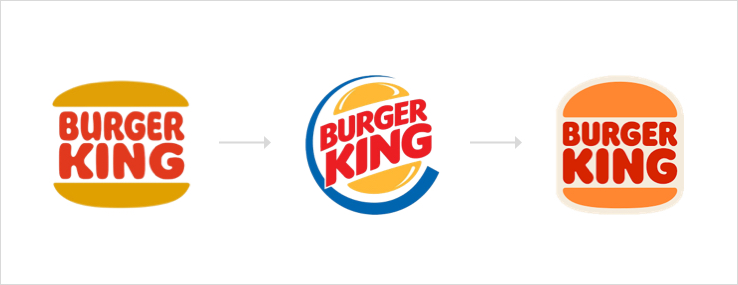
Several major brands recently returned to an earlier iteration of their logos because it scaled better for digital usage. For example, the newest Burger King logo (introduced in 2021) is nearly identical to their legacy logo, which was discontinued in 1999. Also, the ABC television network recently returned to its 1962 logo because it scaled more easily for digital usage than its more recent logo that featured 3D gradient effects, which didn’t scale well.
2. Social Media and Smartphone Usage
Most law firms have text-only logos (not to mention long, long names) that tend to look awful when squeezed into the little logo bubble offered by social media platforms like LinkedIn, Facebook, and Instagram.
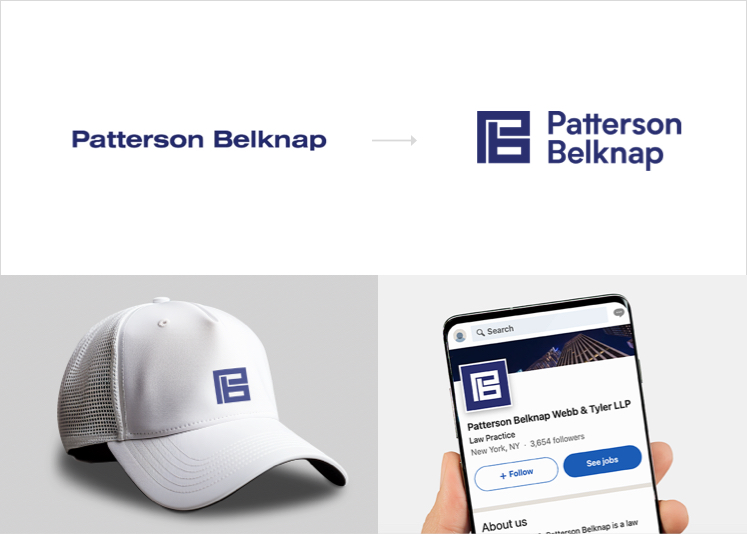
For this reason, Patterson Belknap recently evolved its logo to include an icon. This kind of brand mark works much better on social media, and it has the added benefit of looking great on a baseball cap (among other usages).
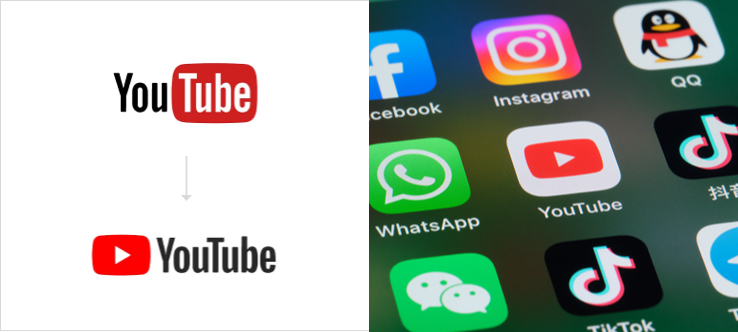
Similarly, the original YouTube logo was designed before the invention of the smartphone. As a result, the logo didn’t lend itself to the square format of a smartphone app icon. So, like Patterson Belknap, YouTube tweaked its logo to include an icon that would stand out within this new context.
3. A More "Modern" Website
It’s nearly impossible to modernize the look of an organization’s website if the logo is old and stodgy. This is because the logo is typically the first thing you see on every page of the site.
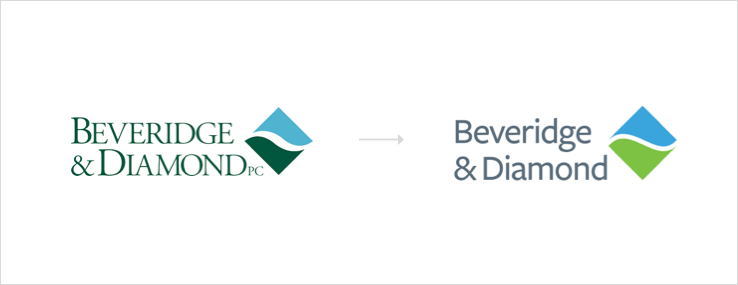
For example, the old Beveridge & Diamond logo impeded the design of a fresh-looking new website. So, the firm decided to make some subtle adjustments to color and font to modernize the logo, without reinventing it. To maintain brand consistency, only minor tweaks were made to the firm’s wave icon.
4. ADA Color Contrast Compliance
Over the past several years, ADA compliance for websites has become a “must-have” for most large organizations, law firms included. One of the most challenging aspects of ADA compliance is the minimum color contrast requirement, which is intended to make sites more accessible to people with vision problems.
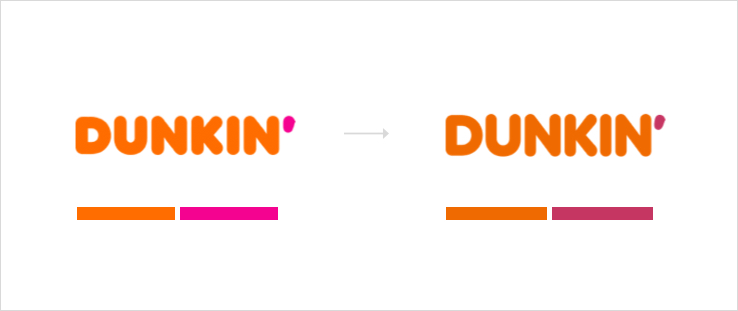
Many older companies (like Dunkin Donuts) have brand colors that were selected long before color contrast was a consideration. Thus, color contrast is (increasingly) a catalyst for a tweak of their logo and brand colors.
In the case of Dunkin, their logo was redesigned in 2019 (to remove the word Donuts). Just three years later, as part of a website redesign, they tweaked their logo again to address color contrast issues.
Key Takeaways
- When considering a change to their logos, law firms often think that they have a binary choice: keep it as is or redesign it from scratch. A better approach is to evolve the logo.
- The most successful brands like Apple, Shell, and Coca-Cola incrementally evolve their logos, retaining brand equity while modernizing their look.
- Digital scalability is a common reason for a logo tweak, as logos designed for print might not translate well to screens.
- Social media usage requires logos that work well in small formats. Adding an icon to text-only logos can enhance visibility on platforms like LinkedIn and Instagram.
- Modernizing a website often necessitates logo updates, as old logos can impede a fresh design. Subtle adjustments to color and font can modernize a logo without a complete redesign.
- ADA color contrast compliance is increasingly important. Logos and brand colors may need tweaks to meet accessibility standards.
About the Authors
Robert Algeri is a co-founder of Great Jakes, a strategy-first brand and website design agency that partners exclusively with growth-focused law firms. He helps firms clarify their positioning and translate it into modern digital experiences that differentiate them from competitors. Deeply involved in the legal marketing community, Robert is an active member of the Legal Marketing Association (LMA) and has served on a range of boards and committees. He also writes and speaks regularly on law firm branding, websites, and growth, including contributions to industry outlets such as the LMA’s Strategies magazine.
Dion Algeri is a co-founder and Creative Director at Great Jakes. For more than 20 years, he has helped shape modern legal marketing by translating a deep understanding of the legal marketplace into sophisticated digital experiences for law firms. He writes and speaks frequently on legal marketing, including contributions to the American Bar Association’s Law Practice magazine. Dion also serves as editor of the Great Jakes blog, where he shares practical insights on law firm branding and websites.