There’s no shortage of hype and noise around AI right now. For legal marketers, the challenge is figuring out what actually matters, and what deserves action.
So, we looked at the data.
After reviewing traffic patterns across our client portfolio over the past year, two trends stood out. And they weren’t quite what we expected.
Trend 1: There’s no clear “crawl-to-click gap”
The term “crawl-to-click gap” describes a growing problem: AI platforms are using your website content to answer users’ questions while sending only a small trickle of traffic back to your site.
In some industries, marketers are already reporting declines in website traffic. However, among the law firm websites we reviewed, traffic has remained steady.
That doesn’t mean AI search has had no impact. But the more dramatic predictions about AI answer engines draining law firm website traffic have not materialized. At least not yet.
Trend 2: AI referrals remain minimal
Our analysis also found that, despite all the hype, referrals from AI answer engines like ChatGPT and Perplexity still account for a minuscule share of website traffic. Here are some stats:
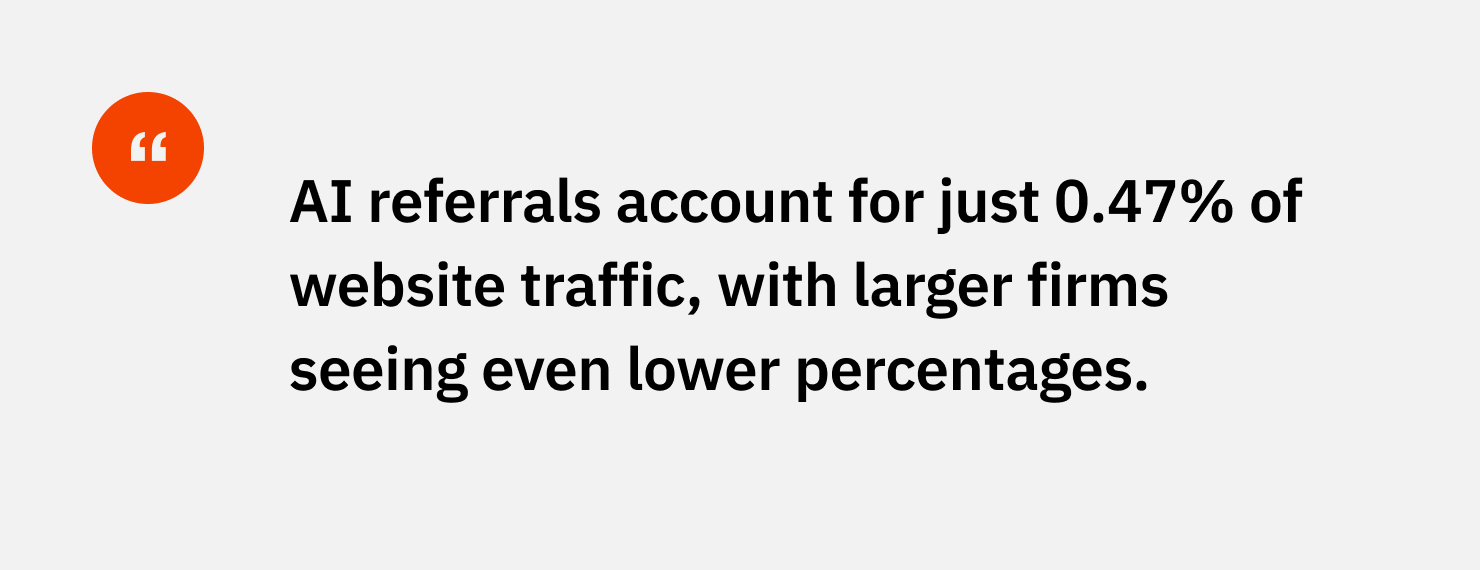
- Across our client sites, AI referrals accounted for just 0.47% of sessions on average, with larger firms seeing even lower percentages.
- By comparison, LinkedIn referred 187% more sessions than AI answer engines, on average.
- Google refers far more traffic. On average, 48% of sessions across our clients' sites came from Google searches. Some clients saw over 60%.
- While the share of AI referrals is currently anemic, it is up 220% over the past year.
What These Stats Mean for Law Firms
Doing this research helped us put the current AI conversation in perspective. Here’s how we see it:
- While traffic referrals from AI search are currently just a small trickle—they are growing.
- AI’s influence on how clients discover and evaluate law firms will most definitely increase over time. There is no data to the contrary.
The trend towards AI search is undeniable. So, it makes sense for law firms to take deliberate steps to ensure that AI systems can understand, surface, and accurately describe their firm, their attorneys, and the work they do. And the place to start is your website.
Optimizing Your Website for AI
While the field of AEO is still very young and in flux, some website best practices have emerged. We have identified six:
1. Google-Ready Architecture
If your website is built to be “Google-ready,” it’s well-positioned for AEO. A “Google-ready” website includes attributes such as
- Fast page loading
- XML sitemaps
- Semantic HTML
- Auto-optimization of Document Titles
- Auto-optimization of Page Slugs
- Strong internal linking
- Clean information architecture
2. Structured Data (Schema)
One thing that everybody agrees on is that “Schema” markup is very important for both SEO and AEO.
So, what is Schema?
Schema is structured data added to a website’s code to help machines understand the data on the page, and how key pieces of information relate to one another. For example, Schema can be added to an Event page to indicate the date of the event. Without Schema, the robots would have to guess the event date (and could get it wrong, especially if there were multiple dates on the page).
3. Bot Governance
Historically, bot management was fairly simple: allow the good bots and block the bad ones. That approach is no longer enough. AI search has created a more complicated bot environment. Some AI-related bots may be useful, while others may create performance issues, scrape content without clear value, or place unnecessary strain on the site.
4. Topical Authority
AI systems are more likely to cite attorneys and firms that demonstrate clear topical authority. That authority depends on two things:
- Depth of content. The website should contain a strong body of supporting material, including news, publications, blog posts, case studies, events, and representative matters.
- Clear connections between content. The website also needs to make relationships clear between attorneys, practices, industries, offices, insights, news, events, and experience.
5. Niche-Focused Attorney Bios and Practice Pages
AI rewards specificity. The strongest attorney bios and practice pages clearly explain what niche the lawyer or practice serves, what problems they solve, and what industries or issues they know best. This article offers details: AI Visibility and Attorney Bios.
6. Content that is Easy to Interpret
Summaries, key takeaways, descriptive headings, concise introductions, and clearly structured pages help both human readers and AI systems understand what a page is about.
Thinking Beyond the Website
While AEO efforts should always start with your website, it’s imperative that they extend across the firm’s full marketing ecosystem.
The reason has to do with something called “query fan-out”— a technique that AI systems use to break a user’s question into related sub-questions and search across multiple sources for the most useful and authoritative answers.
Sometimes those answers will come from your firm’s website. But often, they will be pulled from other sources, including social media, earned media, directories, rankings, and other third-party references.
The more consistently your firm’s expertise is reflected across credible sources, the easier it becomes for AI search systems to recognize your firm as a relevant and trustworthy authority.
A Final Thought
The noise and hype around AEO aside, early data strongly suggests that it has the potential to significantly affect legal marketing.
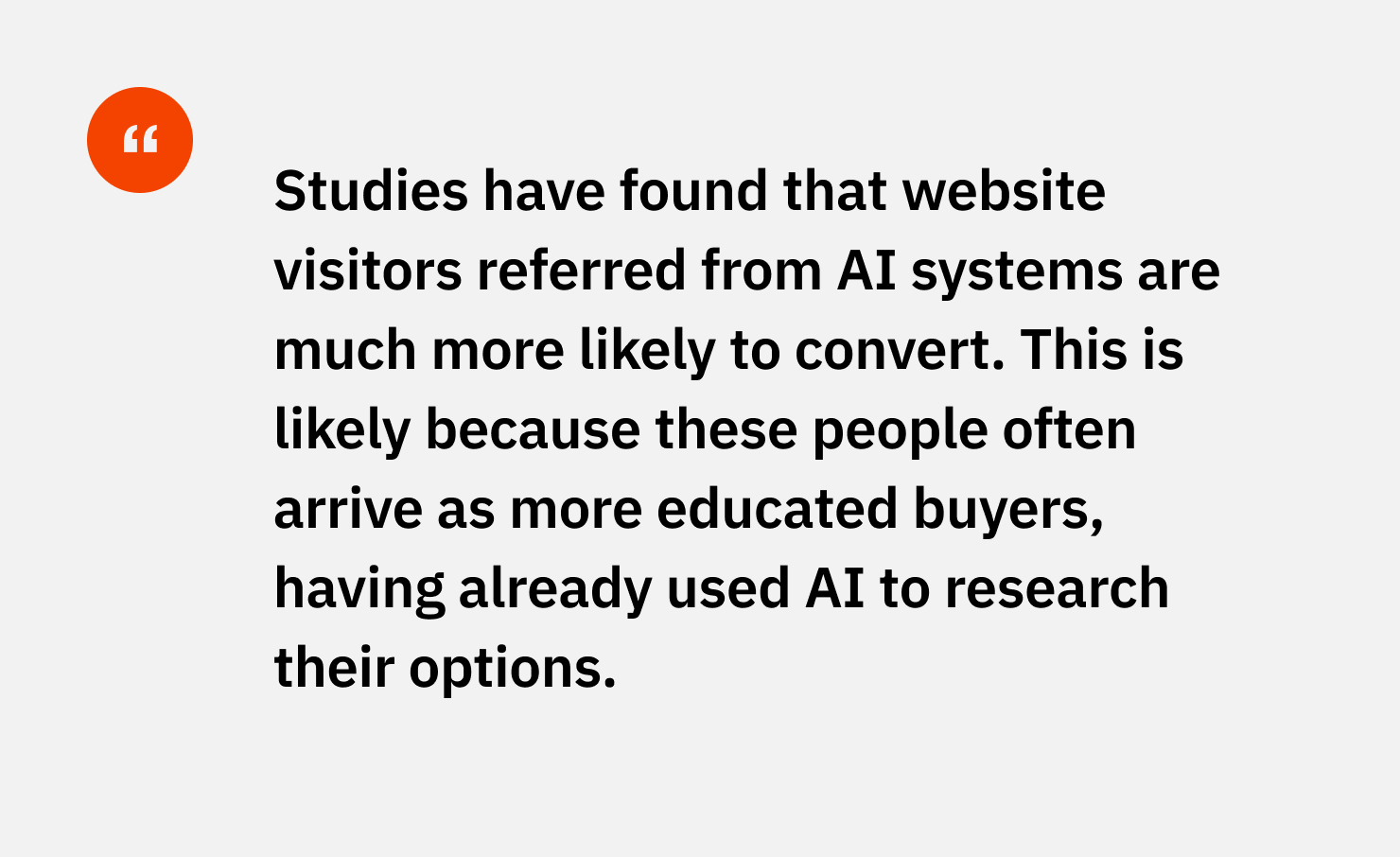
For example, a number of studies in the ecommerce sector (e.g., here, here and here) have found that visitors referred from ChatGPT and other AI systems are much more likely to convert. This is likely because these visitors often arrive as more educated buyers, having already used AI to learn about their options, narrow their choices, and better understand what they need.
So, making your law firm visible to AI systems matters, and it will likely matter more in the months and years ahead. Unfortunately, there’s no silver bullet. Success comes from investing in the fundamentals: strong website architecture, focused content, structured data, clear attorney positioning, and a steady stream of credible thought leadership.
These investments can improve AI visibility, while also making your website more useful, persuasive, and effective for the people who visit it.
About the Authors
Robert Algeri is a co-founder of Great Jakes, a strategy-first brand and website design agency that partners exclusively with growth-focused law firms. He helps firms clarify their positioning and translate it into modern digital experiences that differentiate them from competitors. Deeply involved in the legal marketing community, Robert is an active member of the Legal Marketing Association (LMA) and has served on a range of boards and committees. He also writes and speaks regularly on law firm branding, websites, and growth, including contributions to industry outlets such as the LMA’s Strategies magazine.
Dion Algeri is a co-founder and Creative Director at Great Jakes. For more than 20 years, he has helped shape modern legal marketing by translating a deep understanding of the legal marketplace into sophisticated digital experiences for law firms. He writes and speaks frequently on legal marketing, including contributions to the American Bar Association’s Law Practice magazine. Dion also serves as editor of the Great Jakes blog, where he shares practical insights on law firm branding and websites.