Many law firms struggle to tell their story. Their firmwide messages often get muddied because firms typically offer dozens of services to numerous client types. As a result, it’s very difficult for a website visitor to understand what a firm actually does well.
One solution: Highlighting Core Practices.
What exactly are “Core Practices”?
Core Practices are a firm’s key services – usually the 3-6 areas in which the firm has the greatest experience, expertise, and/or opportunity for growth.
Mentioning Core Practices at highly visible locations on a firm’s website (including the homepage, footer, and the Services page) delivers a variety of benefits such as
- A more streamlined user experience
- A stronger brand message
More about these benefits below.
What’s wrong with a traditional Practice Areas list?
A typical list of practices on a law firm website contains dozens, if not hundreds, of items. Such lengthy lists tend to be long and monotonous. Additionally, a typical list of services doesn’t tell you much about the firm’s actual competencies. Is “Tax” a core competency of the firm or a support practice? You’d never know from looking at a typical services list.
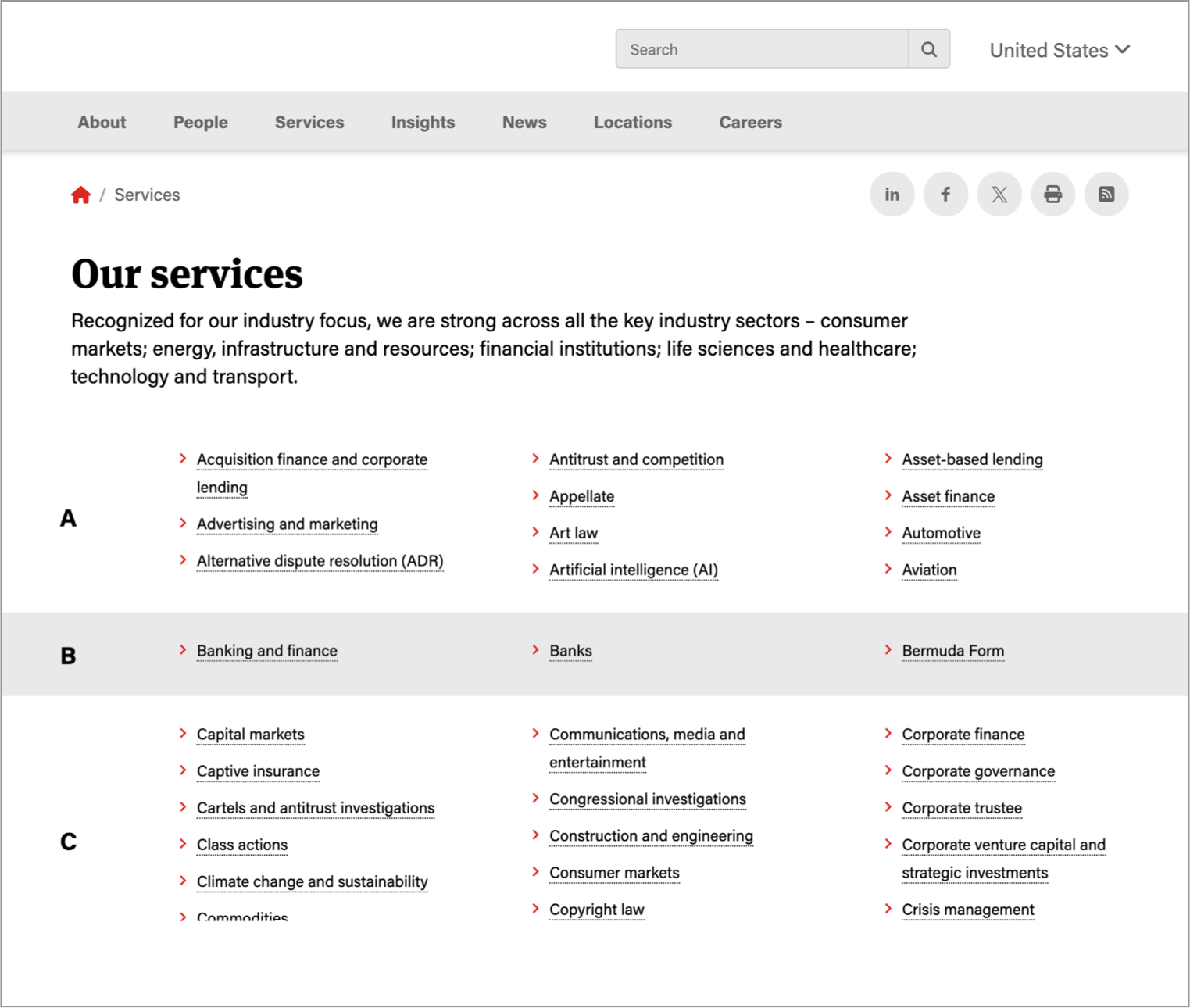
In our experience, it’s not unusual for a firm to list 50 services and for just five of them to account for 80% of the firm’s business. The goal of the “Core Practices” list is to highlight those five key practices.
Are there different types of Core Practice lists?
Basically, there are two flavors of Core Practices lists:
- Service Buckets – In this scenario, a firm establishes several broad categories (or buckets) of practices, and each of the firm’s services is assigned to one (or more) of those buckets. Most firms that use this approach have a bucket for Litigation and another for Corporate/Transactions – and then two or three others that actually reveal where the firm’s unique expertise lies (such as Real Estate or Regulatory or Intellectual Property). Taft Law is an example of a firm that categorizes its services into buckets.
- Curated Lists – In this option, a firm plucks out the 5 or 6 most important offerings from a long list of practices. The goal of a curated list is simply to highlight key offerings (as opposed to categorizing all services into a few buckets). Polsinelli uses this approach.
Examples of Core Practices
Patterson Belknap
For Patterson Belknap, Core Practices are central to its brand – and thus displayed throughout its website. Their website features three core practices, which appear on the homepage (above the fold). Each core practice links to a landing page where visitors receive a highly tailored message, as well as links to all the related sub-practices.
Additionally, the core practices appear in the footer (on all pages of the site) as well as in the Practices menu panel.

Ballard Spahr
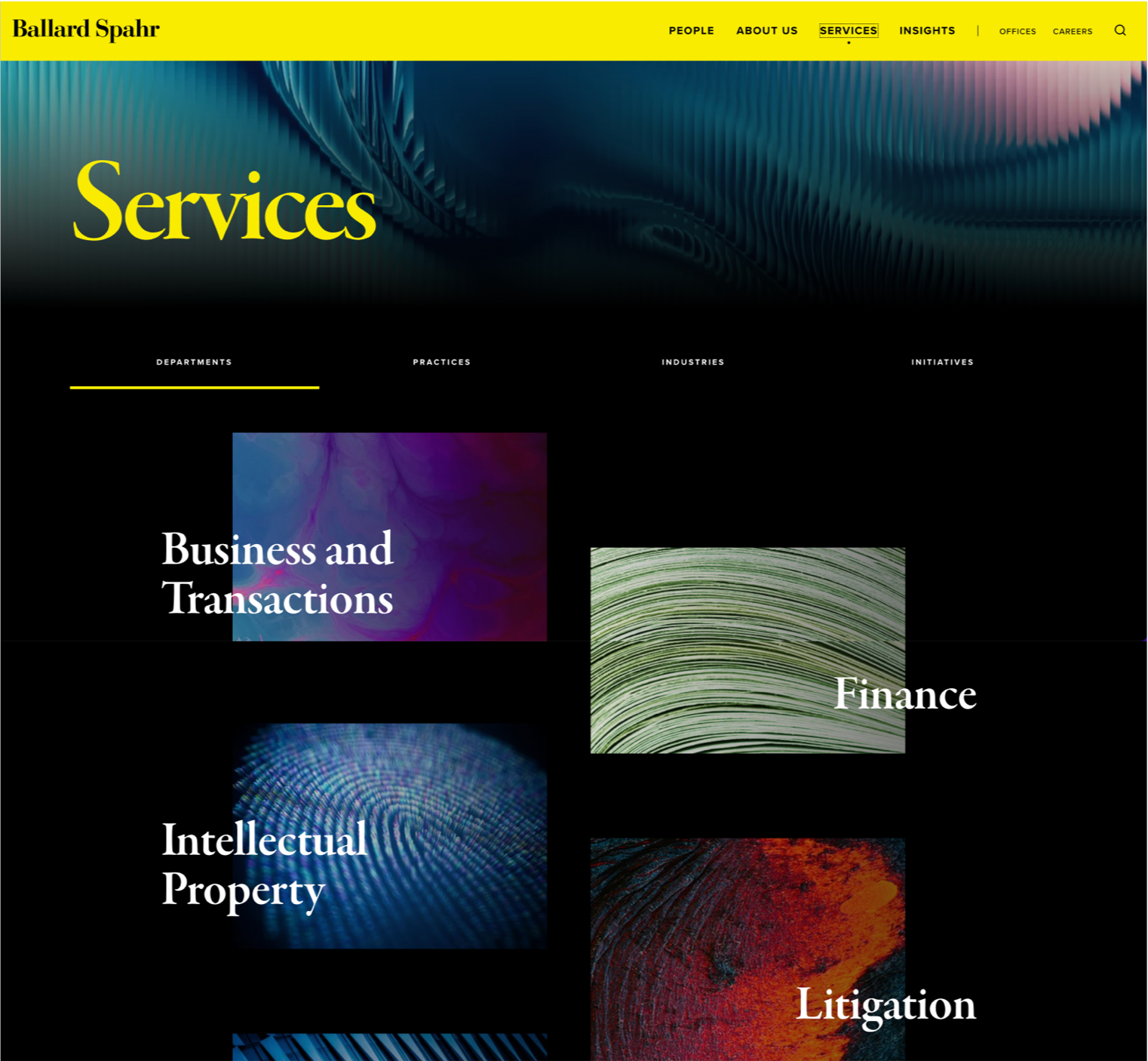
When you visit the “Services” page of Ballard Spahr, you’re initially presented with highly graphical links to their five Core Practices (which the firm calls “departments”). If you click on one of the department links, you are brought to a landing page that is overflowing with information about that department, including Success Stories, Recognition, Insights, and Related Practice Areas. The Business & Transactions landing page even promotes a related podcast.
Polsinelli
Polsinelli highlights seven Core Practices above the fold on its Capabilities page. The firm’s full list of services is located lower on the page. Polsinelli’s Core Practices list is a curated list, as opposed to most firms that are using the “service bucket” approach. Clicking on one of the Core Practices brings you to a landing page that is designed to provide an overview of that Core Practice and includes prominent links to the various sub-practices.

Ice Miller
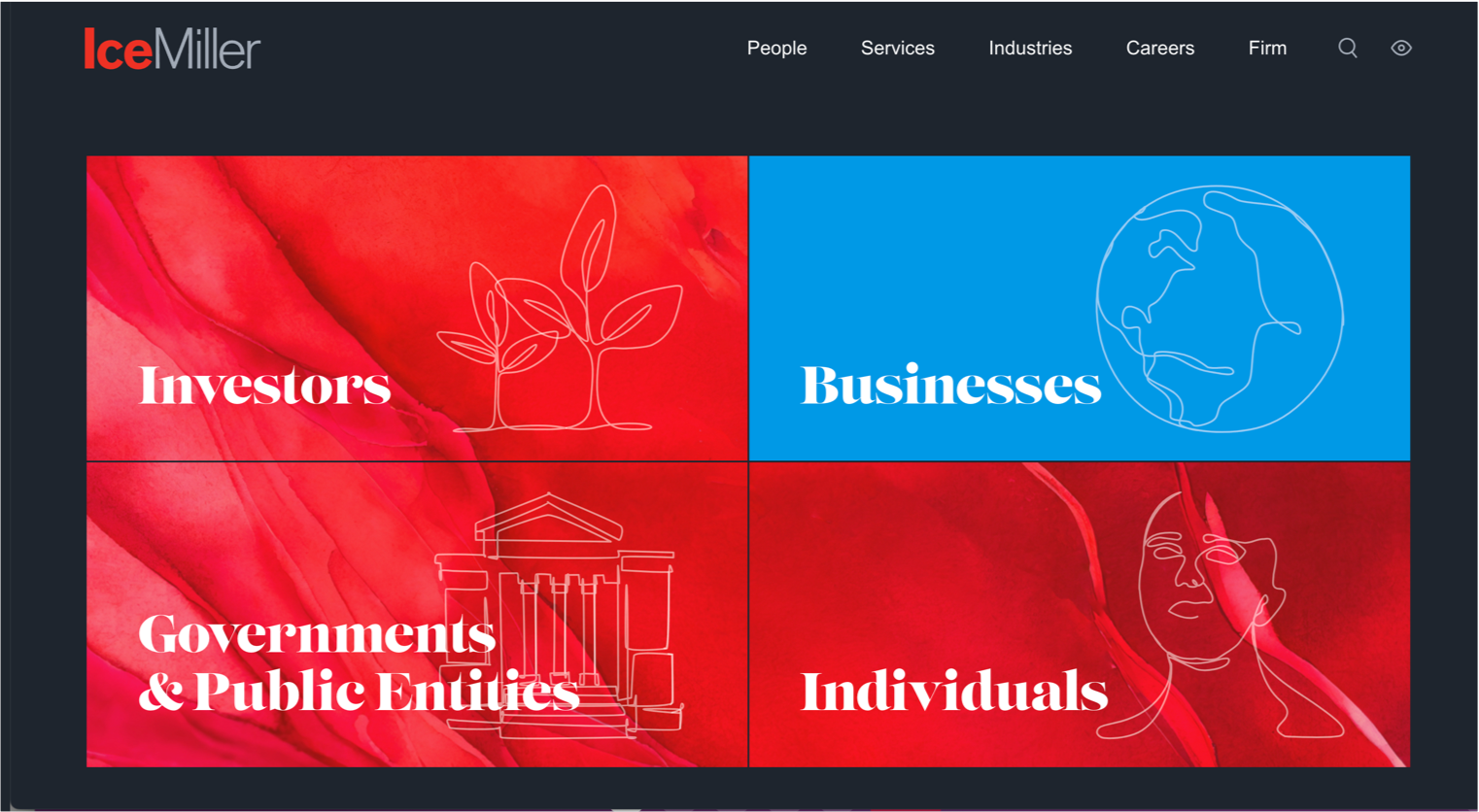
Ice Miller uses a unique approach: it organizes its key services by client type. On the homepage, four client types appear prominently above the fold. If you click on one of the client types, a list of key services appears. Services are also organized by these four client types on the Services menu panel and Services landing page.
Miller Titerle
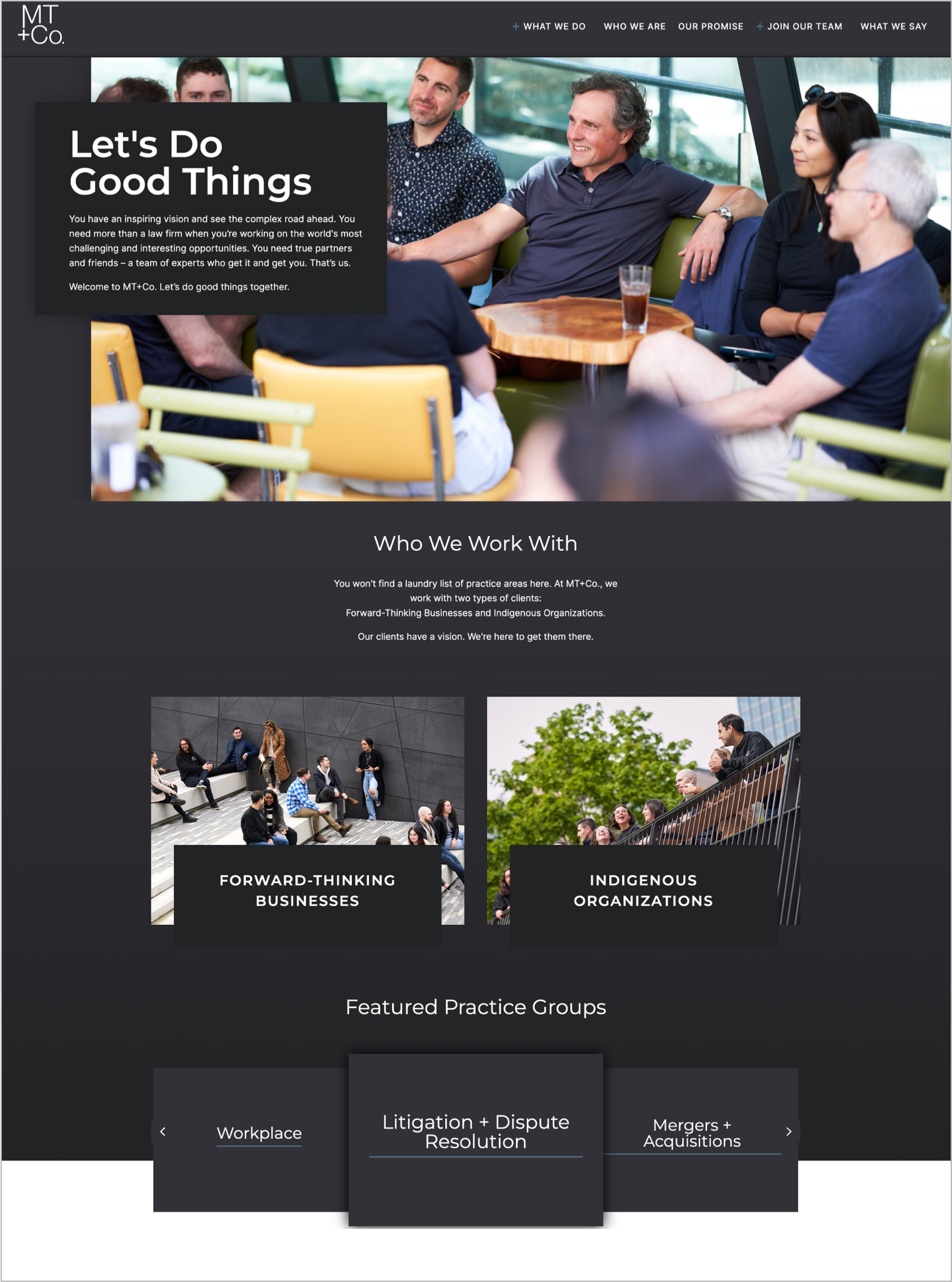
Miller Titerle is a Canadian firm that does a lot of work with indigenous communities. The firm has a fantastic website that uses both service buckets and a curated list.
The firm categorizes its services into buckets by client type: “forward thinking businesses” and “indigenous organizations.” This two-bucket approach is reflected on the homepage and in the “What We Do” menu. Additionally, their homepage highlights the firm’s three key practices: Workplace, Mergers & Acquisitions and Litigation & Dispute Resolution.
Bicklaw
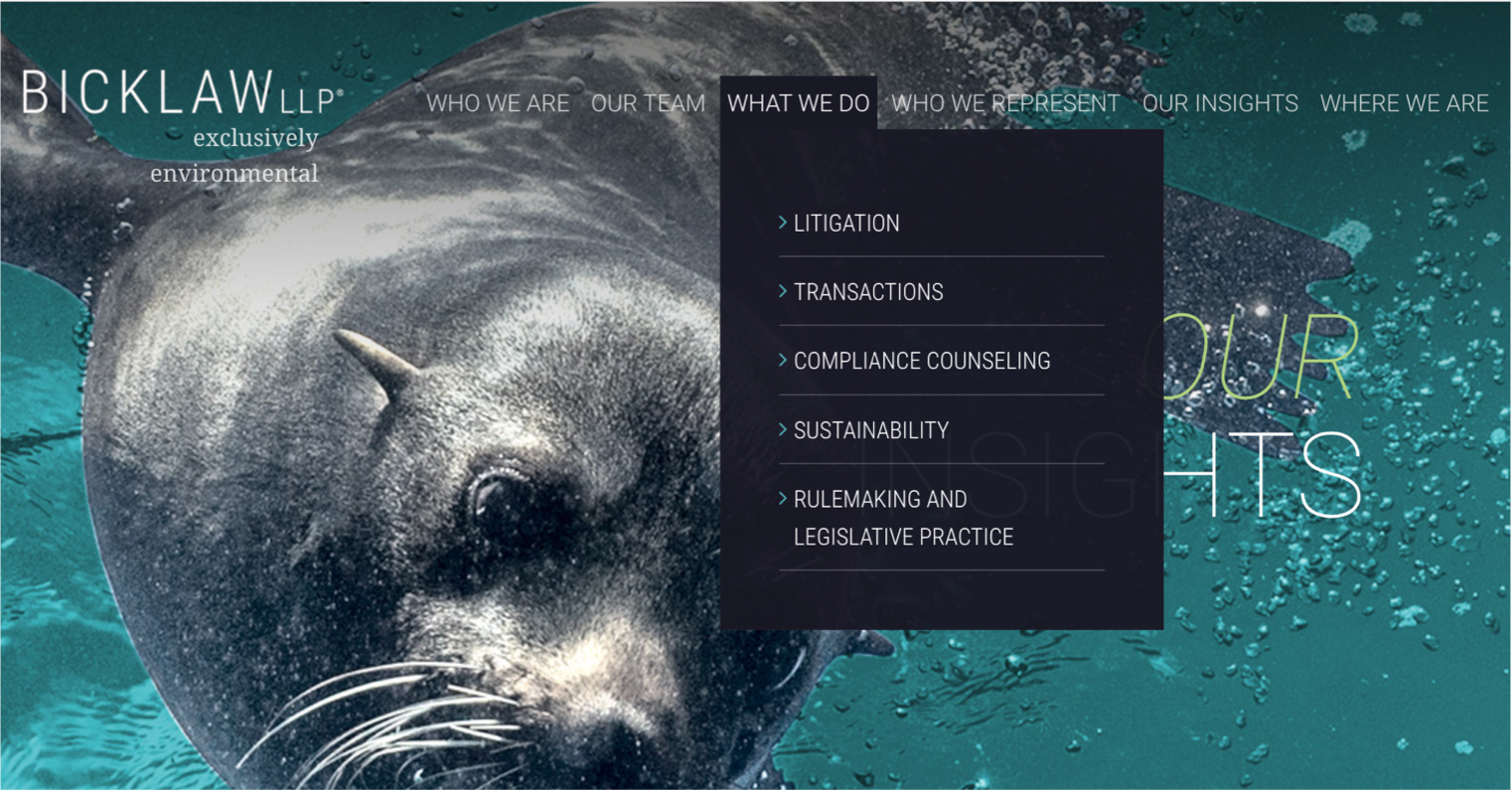
This boutique environmental law firm punches (far) above its weight with a unique website that prominently displays its Core Practices on the homepage, in its “What We Do” menu, as well as on the various Services pages.
Some Final Thoughts
Establishing a list of 3-6 Core Practices is no easy task for most law firms, as firm politics will inevitably come into play. Some firms, particularly those with a consensus-driven culture, run the risk settling on a too-long list of core practices, which negates the benefits.
However, firms that are successful in crafting a lean list of Core Practices will offer website visitors a stronger brand message and a streamlined visitor experience. Most law firm websites would benefit greatly from improvements in both of these areas.
We are big proponents of the use of Core Practices lists, and we expect many firms to head in this direction. If you’ve seen a particularly good implementation of Core Practice Areas, please send it our way. We’re always looking for examples of great work.
About the Authors
Robert Algeri is a co-founder of Great Jakes, a strategy-first brand and website design agency that partners exclusively with growth-focused law firms. He helps firms clarify their positioning and translate it into modern digital experiences that differentiate them from competitors. Deeply involved in the legal marketing community, Robert is an active member of the Legal Marketing Association (LMA) and has served on a range of boards and committees. He also writes and speaks regularly on law firm branding, websites, and growth, including contributions to industry outlets such as the LMA’s Strategies magazine.
Dion Algeri is a co-founder and Creative Director at Great Jakes. For more than 20 years, he has helped shape modern legal marketing by translating a deep understanding of the legal marketplace into sophisticated digital experiences for law firms. He writes and speaks frequently on legal marketing, including contributions to the American Bar Association’s Law Practice magazine. Dion also serves as editor of the Great Jakes blog, where he shares practical insights on law firm branding and websites.